Supply chain visibility has become one of the most frequently discussed goals in operations. Yet many organizations already have dashboards, warehouse systems, supplier portals, transportation applications and business intelligence tools — and still struggle to answer relatively simple questions.
Which customer orders are at risk?
Where is the inventory that could protect those orders?
Which supplier delay will affect production next week?
What is the financial impact of expediting a shipment?
How much working capital is tied up in inventory that the business does not actually need?
These questions reveal an important distinction.
Having more supply chain data is not the same as having supply chain visibility.
True visibility means connecting operational events with their business consequences — across procurement, inventory, manufacturing, logistics, sales and finance — early enough for people to make a better decision.
That is where ERP deserves a closer look.
Supply Chain Visibility Is Becoming a Management Issue, Not Just an Operations Issue
Organizations continue to invest heavily in supply chain technology.
PwC's 2024 Digital Trends in Operations Survey found that 85% of operations and supply chain leaders had increased their technology budgets or planned to do so, while 81% were reconfiguring their existing technology stack. Yet 69% said their operations technology investments had failed to fully deliver expected results for at least one reason.
The lesson is not that organizations need less technology.
It is that visibility initiatives need a stronger business architecture underneath them.
Deloitte reported that 76% of manufacturers were adopting digital tools to gain greater transparency across their supply chains. At the same time, McKinsey's 2024 Global Supply Chain Leader Survey continued to identify visibility into tier-two and tier-three suppliers and effective early-warning systems as important areas of vulnerability.
External volatility makes the challenge even more relevant. In McKinsey's 2025 survey of 100 companies, 82% said their supply chains were being affected by new tariffs.
Visibility, therefore, is increasingly connected to financial planning, customer service, sourcing strategy and enterprise risk — not simply logistics reporting.
What Does Supply Chain Visibility Actually Mean?
A practical definition of supply chain visibility is the ability to understand the status, movement, dependencies and business impact of materials, inventory, orders and capacity across the supply chain.
It can be considered at several levels.
Transactional visibility answers questions such as:
- Has the purchase order been confirmed?
- Has the material been received?
- Has the production order been completed?
- Has the customer order shipped?
Operational visibility goes further:
- How much inventory is actually available?
- Which orders are delayed?
- Where is capacity constrained?
- Which shipments are likely to arrive late?
Decision visibility is more valuable still:
- Which shortage should planners address first?
- Should inventory be reallocated between customers or locations?
- Should the company expedite, substitute, reschedule or accept a delay?
- What will each alternative cost?
Finally, financial visibility connects the supply chain with the CFO's agenda:
- What is the impact on margin?
- How much working capital is involved?
- How will additional freight affect landed cost?
- What inventory is at risk of becoming obsolete?
- How could a supply disruption affect revenue or cash flow?
The further an organization moves through these levels, the more visibility becomes an enterprise-management capability rather than a reporting capability.
Why Dashboards Alone Do Not Solve the Problem
A dashboard can visualize data. It cannot automatically make inconsistent data trustworthy.
This is why many supply chain visibility programs run into the same problems.
1. Different systems describe the same business differently
A warehouse system may know physical stock.
An ERP system knows inventory transactions and ownership.
A transportation platform knows shipment status.
A supplier portal knows confirmations.
A CRM system knows what the customer expects.
Finance knows the cost and revenue implications.
Unless these objects are connected through common master data and business processes, a dashboard may simply present several versions of reality on one screen.
2. Data arrives after the decision window has closed
A weekly report showing yesterday's shortage is technically accurate but operationally too late.
Visibility becomes useful when signals enter the decision process early enough to change the outcome.
3. Companies measure events without understanding dependencies
Knowing that Supplier A is late has limited value.
Knowing that Supplier A is late, the component feeds three production orders, two alternative suppliers exist, existing inventory covers four days, and a €2 million customer order is exposed creates decision-ready visibility.
4. Operational and financial views remain disconnected
Supply chain teams may optimize service levels while finance focuses on working capital.
Procurement may achieve a lower purchase price while logistics absorbs higher freight costs.
Operations may increase safety stock to reduce shortages while the CFO sees inventory days increasing.
An effective visibility architecture allows these trade-offs to be evaluated using the same data.
Where ERP Fits into Supply Chain Visibility
ERP should not be confused with every technology required for end-to-end supply chain visibility.
Companies may still need transportation platforms, manufacturing execution systems, IoT data, supplier networks, planning applications, warehouse automation and external risk data.
ERP plays a different role.
It can provide the transactional and financial backbone connecting those systems.
That is important because many of the most valuable supply chain objects already have an ERP dimension:
purchase orders, suppliers, materials, inventory, production orders, sales orders, shipments, cost, invoices, receivables and general-ledger impact.
When these processes share governed data, an organization can move from:
“What happened?”
to:
“Which business commitment is affected, what alternatives do we have, and what will each decision cost?”
That distinction is central to the business case for modern ERP.
Microsoft Dynamics 365 and Supply Chain Visibility
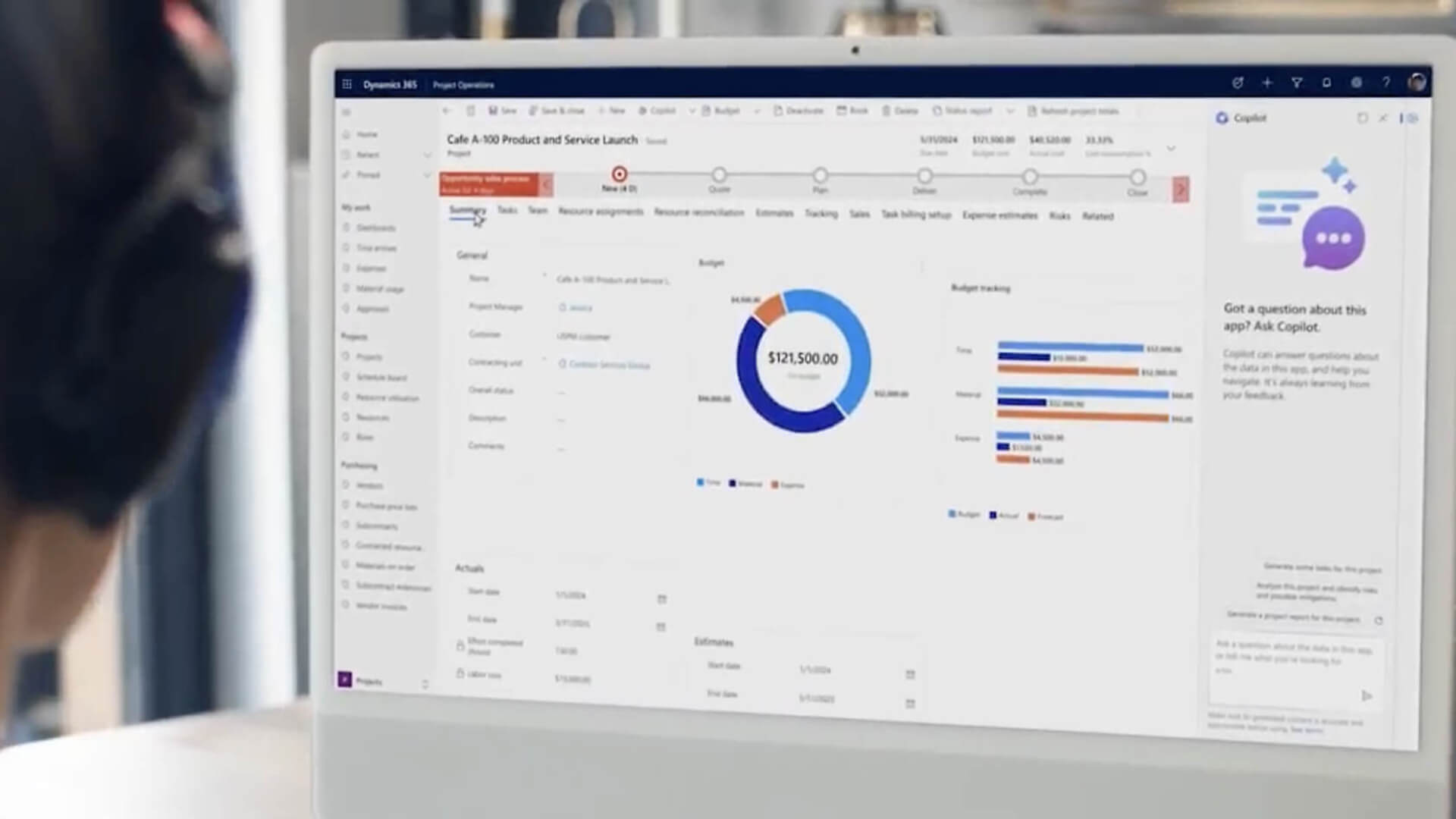
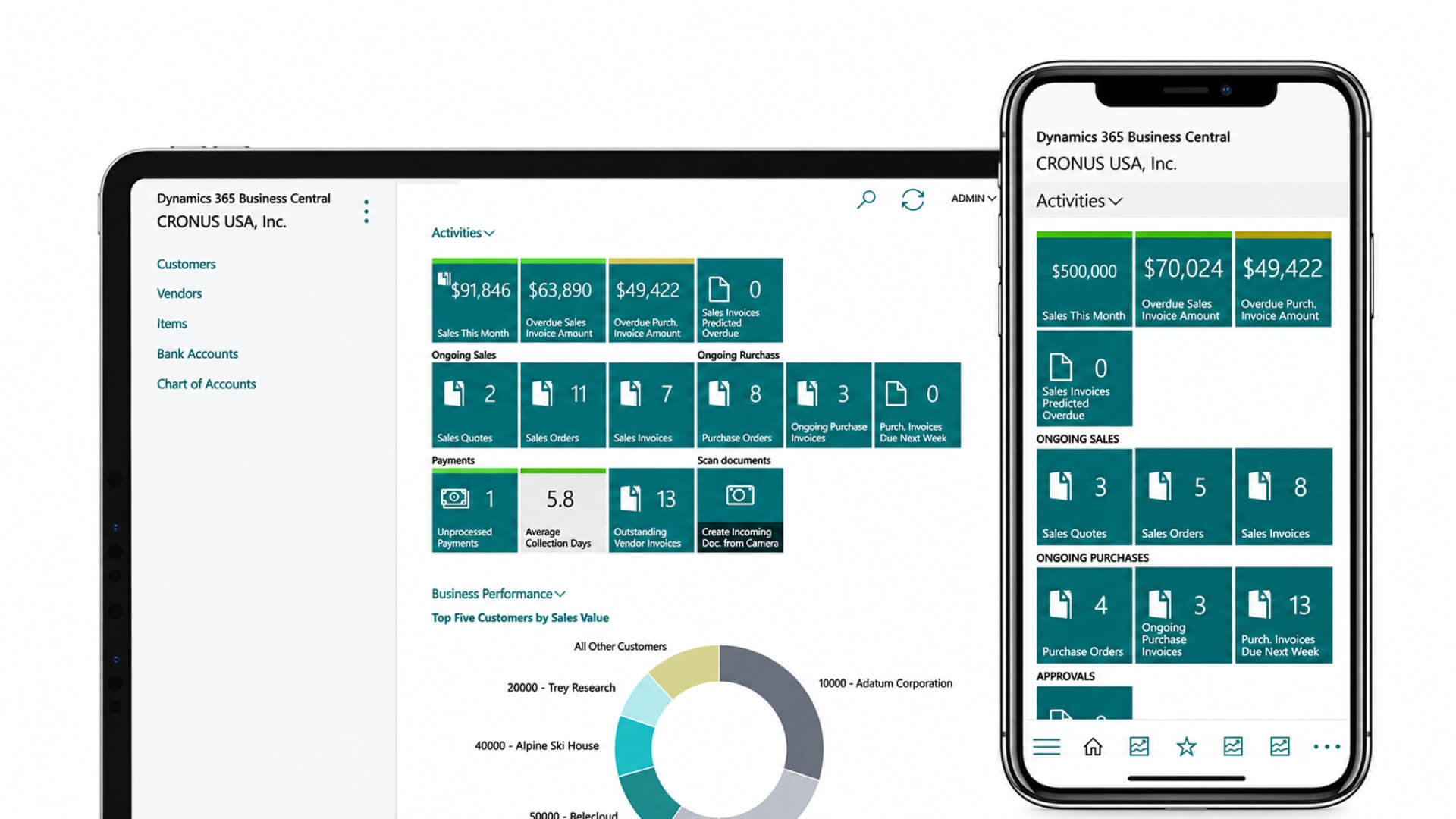
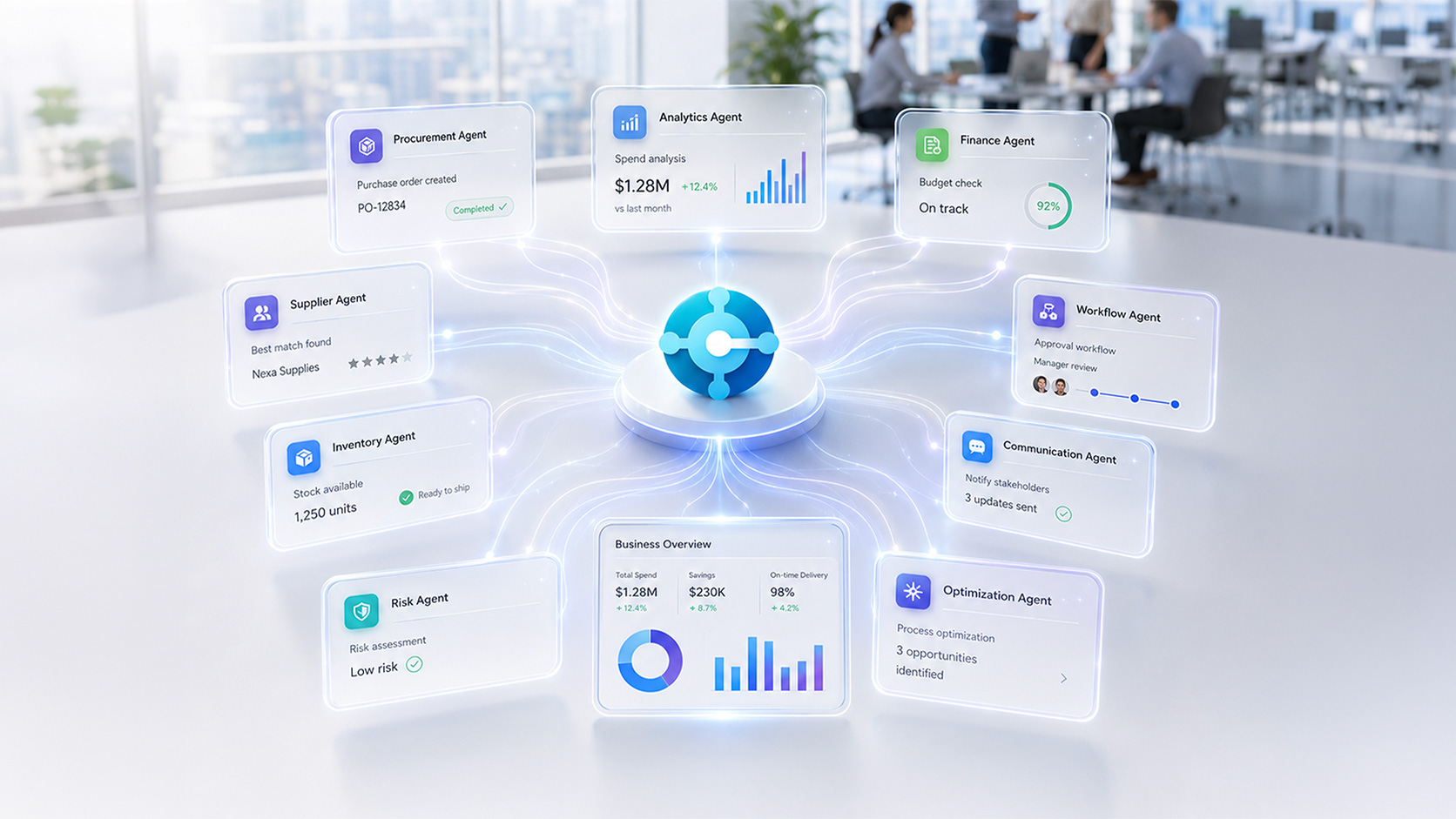
Microsoft positions Dynamics 365 Supply Chain Management around connected planning and execution across supply chain planning, sourcing, shop-floor management, order management, warehousing and asset management. Microsoft also describes its current platform as supporting near-real-time planning responses and connected supply chain visibility.
One particularly relevant capability is Inventory Visibility.
Microsoft describes Inventory Visibility as an independent, scalable microservice capable of posting on-hand inventory changes and tracking inventory across multiple data sources in real time.
That matters in environments where inventory may exist across ERP, commerce, warehouses, third-party logistics providers or other systems.
Rather than thinking only in terms of “stock on hand,” organizations can begin building a more reliable available-to-promise picture across channels and locations.
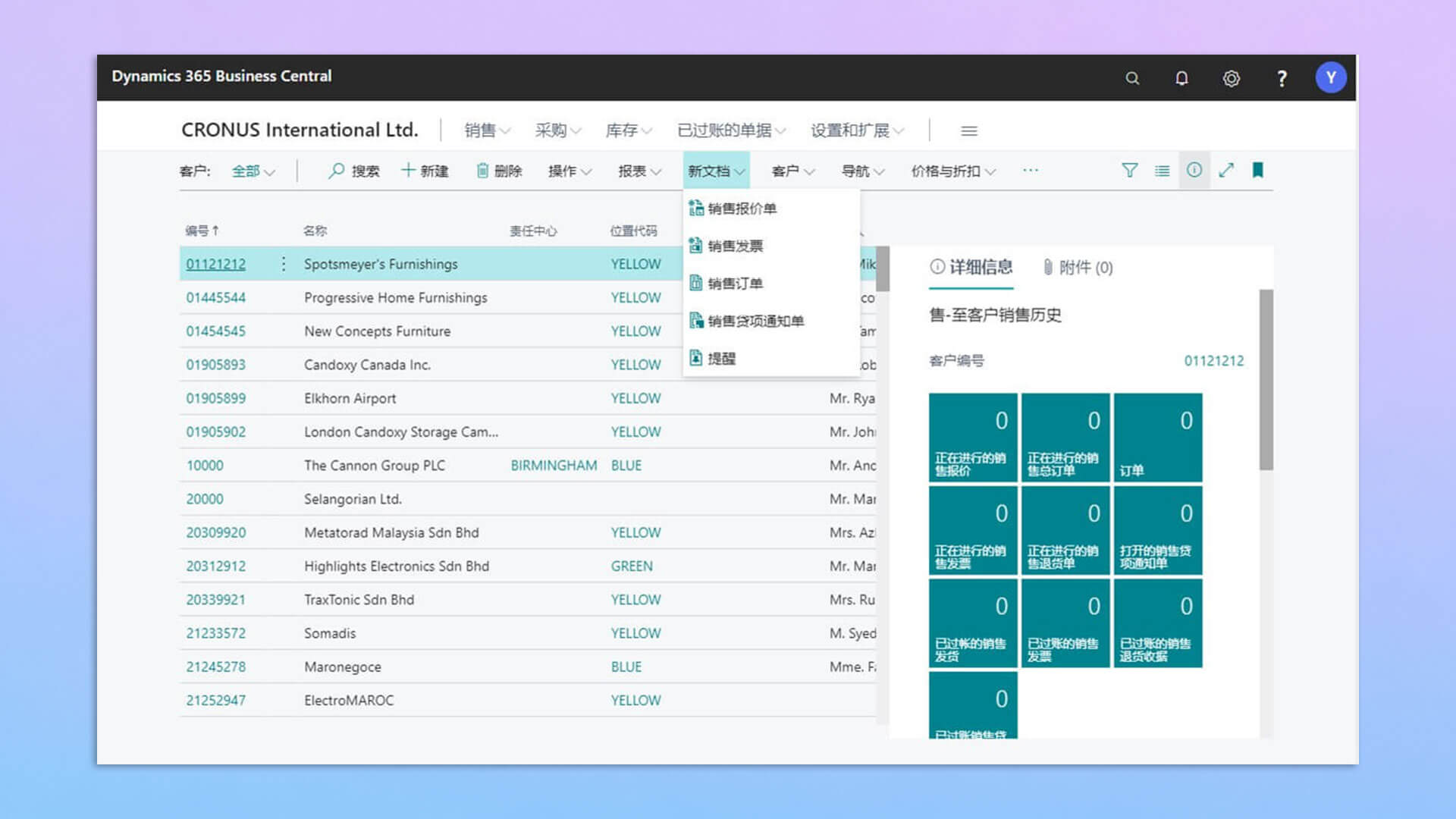
Dynamics 365 is also worth considering where organizations want finance and supply chain processes on a common ERP platform while retaining the broader Microsoft technology ecosystem.
Implementation partners like Tectura describes Dynamics 365 ERP as a way to connect finance, supply chain and commerce rather than maintaining fragmented ERP environments. Tectura emphasizes that meaningful supply visibility depends on integrating supplier, transport, inventory and shop-floor data rather than relying on isolated applications.
The important word here is integration.
Buying Dynamics 365 does not automatically create visibility. Master-data design, interfaces, process governance, planning parameters and user adoption still determine whether the resulting information is reliable.
SAP and Supply Chain Visibility
SAP approaches the same problem through an ERP and supply-chain portfolio that can extend from core transactions into planning, logistics and external collaboration.
SAP S/4HANA Cloud Public Edition spans finance and supply chain processes on an ERP platform, while additional SAP applications address specialized supply chain scenarios.
For planning and exception management, SAP Integrated Business Planning provides intelligent visibility designed to connect information across planning and execution domains. SAP states that users can analyze disruptions, evaluate their impact and navigate between areas including SAP IBP, SAP S/4HANA, manufacturing and transportation processes.
The external-network problem is equally important.
Visibility often disappears when a transaction leaves the enterprise boundary.
SAP Business Network is designed to extend procurement and supply-chain collaboration to trading partners. SAP describes multi-tier collaboration across inventory, quality and procurement processes as a way to improve transparency beyond the enterprise itself.
As a SAP partner, Tectura suggests a layered approach in which SAP EWM provides warehouse transparency, SAP Transportation Management provides tracking and freight visibility, and SAP IBP links planning with real-time response and execution.
Again, the lesson is not that deploying more SAP applications automatically creates end-to-end visibility.
The architecture must match the business problem.
SAP or Dynamics 365: Which Is Better for Supply Chain Visibility?
There is no responsible universal answer.
A better evaluation starts with the operating model.
Dynamics 365 may deserve particular attention when:
- the organization wants to modernize finance and supply chain together;
- Microsoft Azure, Power BI, Power Platform and Microsoft 365 are already strategically important;
- composability and integration with a broader Microsoft architecture are priorities;
- manufacturing, distribution, inventory and warehouse processes fit well with the Dynamics operating model.
SAP may deserve particular attention when:
- the company has complex global manufacturing or supply-chain processes;
- SAP is already deeply embedded in finance or operations;
- advanced planning, transportation, warehousing or multi-tier supplier collaboration are strategically important;
- the organization wants to build on SAP S/4HANA together with specialized SAP supply-chain applications.
But product comparison should come after process diagnosis.
For many companies, the first question should not be:
“Should we buy SAP or Microsoft Dynamics 365?”
It should be:
“Which decisions can our supply chain not make reliably today because the necessary data, process or financial context is missing?”
That question produces a much better ERP requirement.
Five Supply Chain Visibility Use Cases Worth Prioritizing
Instead of launching a broad “visibility transformation,” start with use cases where better information changes measurable business outcomes.
1. Inventory visibility
Can planners see usable inventory across plants, warehouses, subsidiaries, 3PLs and channels?
Track outcomes such as:
- inventory accuracy;
- inventory days;
- stockouts;
- excess and obsolete inventory;
- order fill rate.
2. Supplier and material-risk visibility
Can procurement identify which delayed supplier commitments threaten production and customer orders?
Measure:
- supplier OTIF;
- confirmation reliability;
- material shortages;
- expedite cost;
- alternative-source coverage.
3. Order and fulfillment visibility
Can customer-service teams confidently tell customers what will ship and when?
Measure:
- OTIF;
- perfect-order rate;
- promised-versus-actual delivery;
- backlog;
- premium freight.
4. Planning visibility
Can planners understand how demand changes propagate through inventory, production capacity and procurement?
Measure:
- forecast accuracy;
- planning cycle time;
- schedule adherence;
- inventory buffers;
- exception-response time.
5. Supply chain-to-finance visibility
Can operations understand the financial consequences of supply chain decisions?
Measure:
- working capital;
- inventory carrying cost;
- landed cost;
- purchase-price variance;
- freight variance;
- gross margin;
- cash conversion cycle.
This last category is frequently underestimated.
For CFOs, supply chain visibility becomes far more compelling when it improves not only service levels but also the predictability of cash, margin and working capital.
What to Ask Before Buying Supply Chain Visibility Software or ERP
Before evaluating software demonstrations, executives should ask:
- Which supply chain decisions currently take too long?
- Which decisions are being made using spreadsheets or manually reconciled data?
- Where do inventory numbers disagree?
- How quickly can a supplier disruption be linked to affected production and customer orders?
- Can the organization calculate the financial impact of a supply-chain exception?
- How far beyond tier-one suppliers does meaningful visibility extend?
- Which systems will remain outside ERP?
- How will master data be governed?
- Who owns each exception after the system detects it?
- Which KPIs should improve within the first 6–12 months?
These questions help prevent a visibility project from becoming another dashboard initiative.
The Real Goal: From Visibility to Action
The next stage of supply chain technology will include more AI, predictive models, agents and automation.
But AI does not remove the need for reliable operational data.
It increases it.
An AI agent cannot make a good inventory decision if item, location and availability data are inconsistent. A planning algorithm cannot produce a trustworthy recommendation if supplier lead times are unreliable. And management cannot evaluate an automated decision if its financial consequences are disconnected from operational data.
This is why ERP remains relevant in the era of AI.
ERP may not provide every signal in the supply chain, but it can provide the governed transactional and financial context that turns those signals into business decisions.
For companies evaluating SAP, Microsoft Dynamics 365 or other supply chain platforms, the goal should therefore be larger than “real-time visibility.”
The real objective is to create a supply chain in which people can:
see what changed, understand what it affects, evaluate the financial and operational alternatives, and act before the problem becomes expensive.
That is when visibility starts creating business value.